Windows Fogging or Drafty This Winter: How to Tell Repair From Replacement
Quick Answer: A thin haze on the inside of the glass on a cold morning is normal condensation, and it usually wipes away. Fog trapped between the panes is different — that means the seal has failed, the gas fill is gone, and the glass unit needs replacement, not repair. A draft you can chase down with weatherstripping, fresh caulk, or a hardware adjustment is a repair job. A draft that keeps coming back after those fixes, or one coming from a single-pane frame with no insulating coating, usually means the window has reached the end of its working life. In the North Country, deep frost and freeze-thaw cycles push that decision along faster than they would in a milder climate.
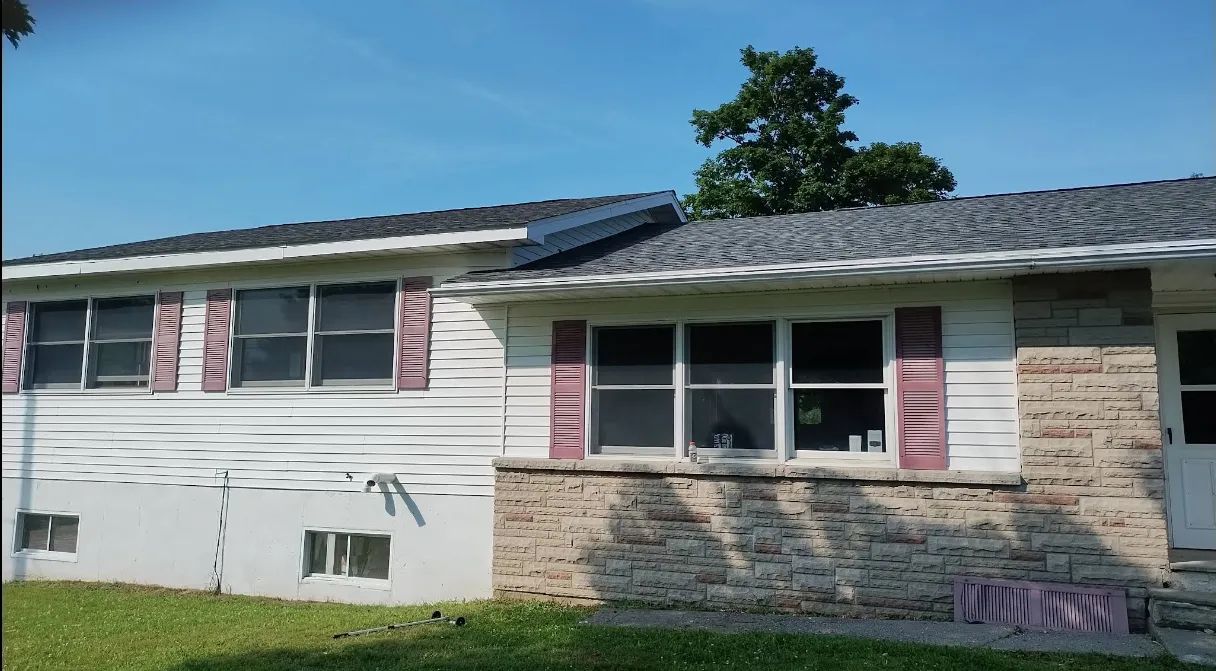
Frost builds up in the corner of a bedroom window in Massena by mid-January, and by February there's a gray haze sitting between the panes that never quite clears, even on a bright, sunny afternoon. Down the hall, a different window rattles every time the wind comes off the river, and you can feel cold air sliding across your hand at the sash even with the storm window latched. Both windows have a problem. They don't have the same problem, and they don't need the same fix.
That distinction matters more once the temperature drops and stays there. A window that's merely drafty around the edges might need nothing more than fresh weatherstripping. A window fogging between the panes has a broken seal that no amount of caulk will repair. Telling the two apart before you spend money on the wrong solution is the whole point of this article.
What's Actually Fogging Up Between the Panes
Most windows installed in the last few decades are double-pane units — two sheets of glass separated by a spacer bar, with an insulating gas (usually argon) sealed inside the gap. That gas fill is what gives the window its insulating value. When the seal around the spacer bar holds, the gas stays put and the glass stays clear. When it doesn't, moist outside air works its way in and the gas works its way out.
The Seal Fails From The Outside In
Sun exposure heats the glass and frame unevenly, and repeated expansion and contraction wears at the outer seal first, then the inner one that holds the spacer bar. Once both seals are compromised, humid air gets between the panes and has nowhere to go.
A Drying Agent Inside The Spacer Eventually Gives Out
The spacer bar itself holds a small amount of desiccant, a material meant to absorb whatever trace moisture sneaks in over the years. That desiccant has a limit. Once it's saturated, any new moisture condenses directly on the inside faces of the glass instead of getting soaked up, and that's the permanent fog you're looking at.
Tip: Wipe the glass first. Condensation on the inside surface of the window — the side facing your living room — will clear off with a cloth and comes back only when indoor humidity is high. Fog sitting between the two panes, where you can't reach it, won't wipe away no matter how many times you try. That's your quickest field test for a failed seal.
Here's the part that catches people off guard: a foggy window can still open, close, and lock just fine. The frame and hardware might be in good shape. It's only the sealed glass unit that's failed, and depending on the window's construction, that sometimes means the sash — not the whole frame — is what needs replacing.
A Draft Isn't Always a Window Problem
Cold air moving across your hand near a window doesn't automatically mean the window is bad. It means air is finding a path through, around, or under something, and the window is only one of several places that path could start.
Start At The Moving Parts
Weatherstripping — the rubber or foam gasket where the sash meets the frame — dries out, compresses, and cracks over years of temperature swings. Run your hand slowly along the sash edges and the meeting rail where the top and bottom sashes overlap. A steady stream of cold air right at that seam usually means the weatherstripping has given out, and that's a repair, not a replacement.
Check The Perimeter Next
The gap between the window frame and the rough opening in your wall is supposed to be packed with insulation and sealed with caulk on the outside. If that seal cracks or the insulation settles over time, air gets in around the frame rather than through it. A bead of exterior caulk and a look at the interior trim will usually tell you which side of that boundary the problem is on.
A lit candle held near the sash edges and frame perimeter on a windy day will flicker where air is actually moving, which narrows down the source faster than guessing. So will simply running your palm slowly around the frame — you'll feel the cold spot before you see anything.
When the Fix Is Small
Not every drafty window in the North Country needs to come out. Some of the most common problems are inexpensive to correct and don't touch the window unit itself:
Worn Weatherstripping
Compressed, cracked, or missing gaskets around the sash are an easy swap in most window styles.
Failed Exterior Caulk
A cracked or missing bead where the frame meets the siding lets wind-driven air and water in, and it's a maintenance item, not a sign the window is failing.
Loose Or Misaligned Hardware
Sashes that don't latch tight, or locks that don't pull the window fully closed, often just need adjustment.
Storm Window Gaps
If you run storm windows, a torn screen frame or a poorly seated storm sash can mimic a draft that has nothing to do with the primary window behind it.
If one of these is the culprit, a repair addresses it directly and the window keeps performing the way it was designed to.
When the Window Itself Is Done
Other signs point somewhere the caulk gun can't fix.
Fog between the panes, as covered above, means a failed seal on a sealed glass unit. That's a glass or sash replacement at minimum.
A draft that returns after weatherstripping and caulking are already fresh usually means the frame itself has warped, or the window was never sealed correctly against the wall when it went in. Chasing the same draft twice in one season is a sign the fix needs to go deeper than the surface.
Single-pane glass with no insulating gas fill or coating is going to lose heat no matter how tight the weatherstripping is. The glass itself, not the seal around it, is the limiting factor there.
Soft, spongy, or visibly rotted wood at the sill or jamb tells you moisture has been getting into the frame for a while, and a frame that's structurally compromised isn't a candidate for a simple repair.
Warning: Don't ignore a sill that feels soft underfoot when you press on it, or trim that's stained and swollen near the bottom corners of the frame. Left alone through another freeze-thaw cycle, that moisture damage spreads into the wall framing behind the window, and what started as a window problem becomes a much bigger repair.
Why the North Country Makes This Call Sooner
Every one of these problems shows up faster here than it would somewhere with a milder winter. Deep frost drives into the ground and works at anything anchored to the foundation, including the framing around basement and first-floor windows. Freeze-thaw cycles — days that climb above freezing followed by nights well below it — expand and contract caulk, glazing compound, and wood fiber over and over across a single winter, which is exactly the kind of repeated stress that breaks seals down early.
Heavy snow load against the house adds its own pressure at window heads and sills, and ice dams forming at the roofline can send meltwater running down the siding and pooling right where a window's top trim meets the wall. That's water finding its way toward a spot it was never meant to sit against, winter after winter.
Cold-climate performance standards reflect just how much this matters. Building science guidance for northern climate zones calls for tighter air leakage limits than milder regions require, generally at or below 0.3 cubic feet of air per minute per square foot of window area, along with a lower U-factor for the glass itself to hold onto heat. A window built to those numbers, installed correctly, is doing real work every single day of a Massena winter. A window that's fallen well short of them is losing that fight quietly, one degree at a time.
What a Proper Assessment Looks At
Deciding between repair and replacement isn't a five-minute glance at the glass. A real assessment walks the whole opening.
The Seal Condition On Every Pane
Not just the fogging window, but every pane should be checked similarly. Seals installed around the same time often experience comparable aging and failure patterns.
The Frame And Sill For Moisture Damage
Soft spots, staining, and swelling should be probed rather than simply inspected visually. Rot can extend deeper beneath the surface than visible damage suggests.
How The Unit Was Set In The Opening
Precise measurements, proper shimming, and complete sealing against air and water at the rough opening matter. Even quality windows underperform when installed loosely or improperly sealed.
Frame Material For The Climate
Vinyl and fiberglass frames handle repeated temperature changes well and resist warping that can widen gaps over time, making them suitable for regions experiencing frequent freeze-thaw movement.
Glass Package
Double-pane glass with low-emissivity coating and argon fill performs differently from older single-pane or early double-pane units, especially during long, cold seasons with significant temperature changes.
For a basement window doubling as a secondary way out, or a bay or bow unit that needs real structural backing behind it, that assessment also has to account for the extra framing and support those styles require — not just the glass and sash.
Not every bouncy deck needs to come down. What it needs is an honest look at the structure and a repair aimed at the real cause instead of the symptom.
It starts with an inspection from below
We probe the wood for soft spots, check every post and footing for movement, and test the ledger and hardware. That tells us whether the boards are the problem or just the messenger for something under them.
Sound structures get reinforced
When the framing is still solid, the fix is often new or deepened footings set below the frost line, added posts or beams to stiffen the span, fresh connectors where the old ones have loosened, and a re-secured, properly flashed ledger. Done right, the bounce goes away and the deck stands firm again.
Failed structures get rebuilt correctly
If frost and rot have gone too far, rebuilding on footings set well below the frost line, sized for the load and the soil, is what keeps the next deck from repeating the same story. Getting the depth right the first time is the whole game in this climate.
What a Proper Fix Looks Like Underneath
Frequently Asked Questions
Is a little fog on the inside of my windows normal in winter?
Yes, condensation on interior glass is normal on cold mornings when humidity is high. It clears in an hour and wipes off. Fog between panes means a failed seal, not humidity.
Can a foggy window be fixed without replacing the whole unit?
Sometimes. Depending on the window's build, you may replace just the glass unit or sash instead of the whole frame. The seal can't be repaired, but swapping the glass resolves the fog.
Why does a window that isn't that old still feel drafty?
A newer window can feel drafty if it wasn't sealed correctly against the wall during installation, if weatherstripping has compressed, or if the frame has shifted. Installation quality matters more than age.
How do I tell a repairable draft from one that means the window is failing?
Try the fix first. Fresh weatherstripping, new caulk, and a hardware adjustment handle most causes. If the same draft returns, or cold air comes through the glass itself, the window is past repair.
Does cold weather actually make window problems worse, or does it just make them more noticeable?
Both. Extreme cold makes existing gaps and seal failures more noticeable, but it's also causing real damage. Freeze-thaw cycling stresses caulk and seals with every swing, which is why problems worsen through winter.
What frame material holds up best through North Country winters?
Vinyl and fiberglass frames generally perform well here, resisting the swelling, splitting, and warping that freeze-thaw cycles cause in less stable materials. Paired with double-pane, low-emissivity glass, either handles North Country winters well.
Knowing the Difference Saves You Real Money
Every window in a North Country home eventually asks the same question: does it need attention or does it need to go. Wiped-away condensation and a weatherstripping fix are simple maintenance, the kind any homeowner can handle without much cost. Fog trapped between panes, warped frames, and soft sills point somewhere else entirely. Learning to tell these signs apart before winter tightens its grip saves money, prevents wasted repairs, and keeps the real problem from spreading further into the wall behind it.
Massena homes face freeze-thaw cycles that most regions never see, which is exactly why seals fail and frames shift faster here than almost anywhere else. Paying attention to these details now protects the investment already sitting in the walls. T&B Next Level Construction LLC
has spent 20+ years working through exactly this kind of decision on homes across the North Country, treating every seal and sash as its own separate question rather than a blanket call to replace.
Recent Posts